
As the global economy undergoes profound transformations driven by climate challenges, technological innovation, and the pursuit of sustainable growth, industrial development has become more than an economic priority—it is now a cornerstone of resilience and long-term prosperity. Across Africa, a new generation of leaders is shaping this transition through innovation, international cooperation, and strategic vision.
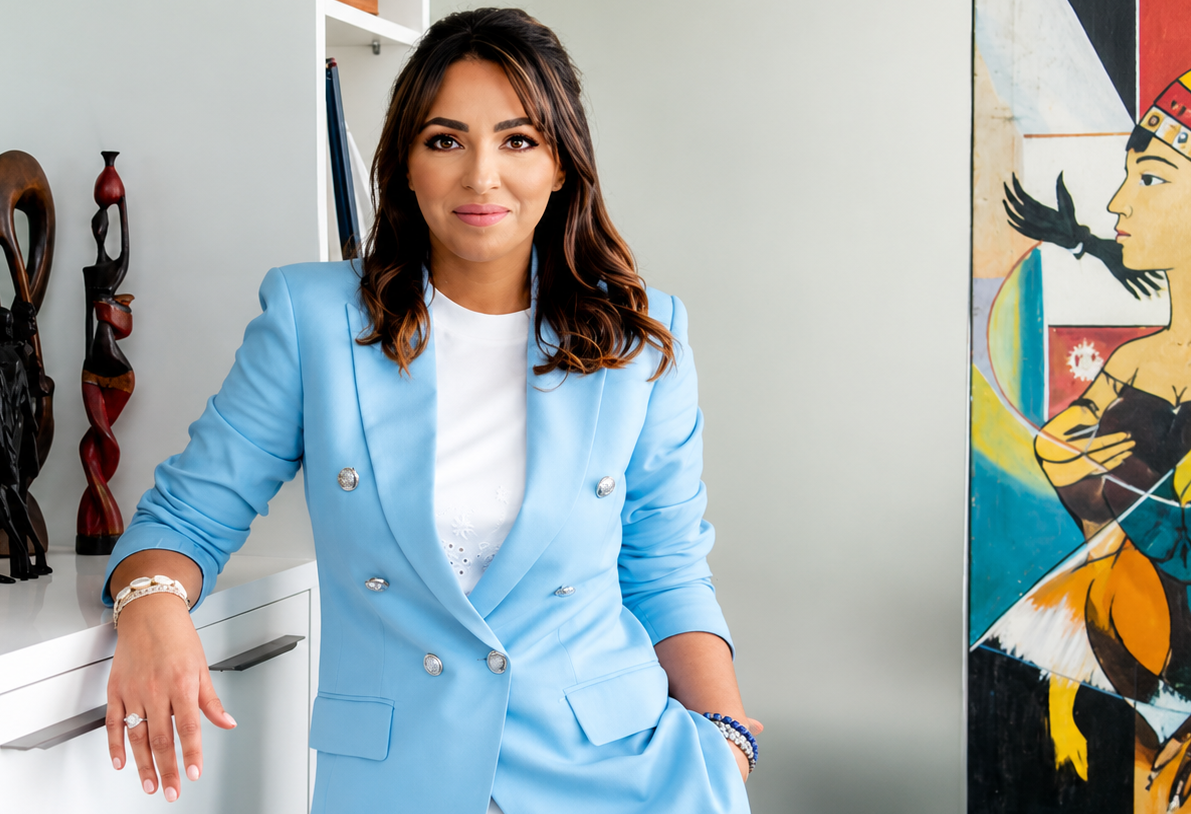
Among these influential figures is Sanae Lahlou, the United Nations Industrial Development Organization (UNIDO) Country Representative in Morocco, whose leadership has positioned her as one of Morocco’s leading voices in promoting inclusive and sustainable industrial development across the African continent.
Since assuming her role in February 2022, Sanae Lahlou has led UNIDO’s strategic initiatives in Morocco, supporting the country’s ambition to strengthen industrial competitiveness, accelerate the green transition, foster innovation, and enhance regional cooperation. Her work reflects Morocco’s growing role as a strategic industrial hub connecting Africa, Europe, and global markets.
A Career Built on International Expertise
Sanae Lahlou brings together extensive experience from both the public and private sectors, as well as international institutions.
Before joining UNIDO, she served as Director of the Africa Business Unit at Mazars Morocco, where she advised governments, institutions, and businesses on strategic development projects across the continent.
Earlier in her career, she spent nearly a decade as Director of International Markets at the Moroccan Investment and Export Development Agency (AMDIE), where she played a key role in supporting Moroccan industrial SMEs in accessing international markets and integrating into global value chains.
She also served as Development Adviser for Africa and the Middle East at the Paris Île-de-France Chamber of Commerce and Industry, strengthening economic partnerships between African and European stakeholders.
This diverse professional background has given her a comprehensive understanding of industrial policy, international investment, trade promotion, and sustainable economic development.
International Recognition for Visionary Leadership
Sanae Lahlou’s commitment to sustainable development and inclusive economic growth has earned her international recognition.
In 2021, she was selected as one of the World Economic Forum’s Young Global Leaders, joining an influential global network of exceptional leaders recognized for their impact on society and their contribution to shaping a better future.
She has also been recognized as a French-African Young Leader by the French-African Foundation and acknowledged as a Global Impact Doer by the Pan African Leadership and Entrepreneurship Development Centre.
These distinctions reflect not only her professional achievements but also her commitment to promoting innovation, gender equality, youth empowerment, and sustainable development throughout Africa.
Strong Academic Foundations
Her leadership is supported by an outstanding academic background.
Sanae Lahlou graduated from Sciences Po Paris and Al Akhawayn University in Morocco. She also earned an MBA in International Business Engineering, a Master’s Degree in Coaching and Leadership from ISCAE Business School, and completed executive programs in sustainability and public leadership at Stanford University, Princeton University, and Oxford University.
Her multidisciplinary education combines economics, international relations, leadership, sustainability, and public policy—skills that are increasingly essential for navigating today’s industrial and environmental challenges.
Leading Morocco’s Industrial Sustainability Agenda
Under Sanae Lahlou’s leadership, UNIDO Morocco continues to support projects that promote industrial modernization, resource efficiency, renewable energy, circular economy practices, and industrial decarbonization.
A significant milestone was achieved in June 2026, when UNIDO Morocco became the first UNIDO field office worldwide to obtain ISO 50001 certification for its Energy Management System.
The certification reflects the office’s commitment to sustainability through practical initiatives such as the installation of rooftop solar photovoltaic panels, energy-efficient lighting, improved air-conditioning systems, and awareness programs encouraging responsible energy consumption.
Today, approximately 40 percent of the office’s electricity comes from renewable solar energy, while overall energy consumption has been reduced by around 25 percent, leading to a reduction of more than 60 percent in carbon emissions.
Beyond its environmental benefits, the Rabat office has become a demonstration site where public institutions, industrial partners, and private-sector stakeholders can observe first-hand how international energy management standards can be successfully implemented.
Commenting on this achievement, Sanae Lahlou emphasized that sustainability must begin within organizations themselves, reinforcing the credibility of the solutions they promote globally.
Promoting Sustainable Industrialization Across Africa
While her mission is based in Morocco, Sanae Lahlou’s vision extends well beyond national borders.
She advocates for an industrial model that combines economic competitiveness with environmental responsibility, technological innovation, and social inclusion.
Her work aligns closely with Africa’s industrial transformation agenda and the United Nations Sustainable Development Goals, supporting initiatives that empower small and medium-sized enterprises, encourage cleaner production methods, improve resource efficiency, and strengthen regional value chains.
As African countries increasingly position industrialization as a driver of sustainable development, Morocco’s experience offers valuable lessons for the continent, and Sanae Lahlou has become one of the voices contributing to this dialogue at both regional and international levels.
A New Generation of Moroccan Leadership
Sanae Lahlou represents a new generation of Moroccan leaders making meaningful contributions within international institutions.
Her career reflects the growing influence of Moroccan expertise in global development and demonstrates how visionary leadership, international cooperation, and sustainable industrial policies can help address some of the world’s most pressing economic and environmental challenges.
Through her commitment to innovation, climate action, and inclusive industrial growth, she continues to strengthen Morocco’s role as a strategic partner for sustainable development in Africa and beyond.