


The second edition of the Ivoire Tech Forum, featuring Rwanda as the guest of honor, served as a prominent platform to showcase Morocco’s strategic approach to digital development. Under the visionary leadership of His Majesty King Mohammed VI, the Kingdom has established an integrated ecosystem designed to foster the creation, development, and integration of structured startups into their economic environment.
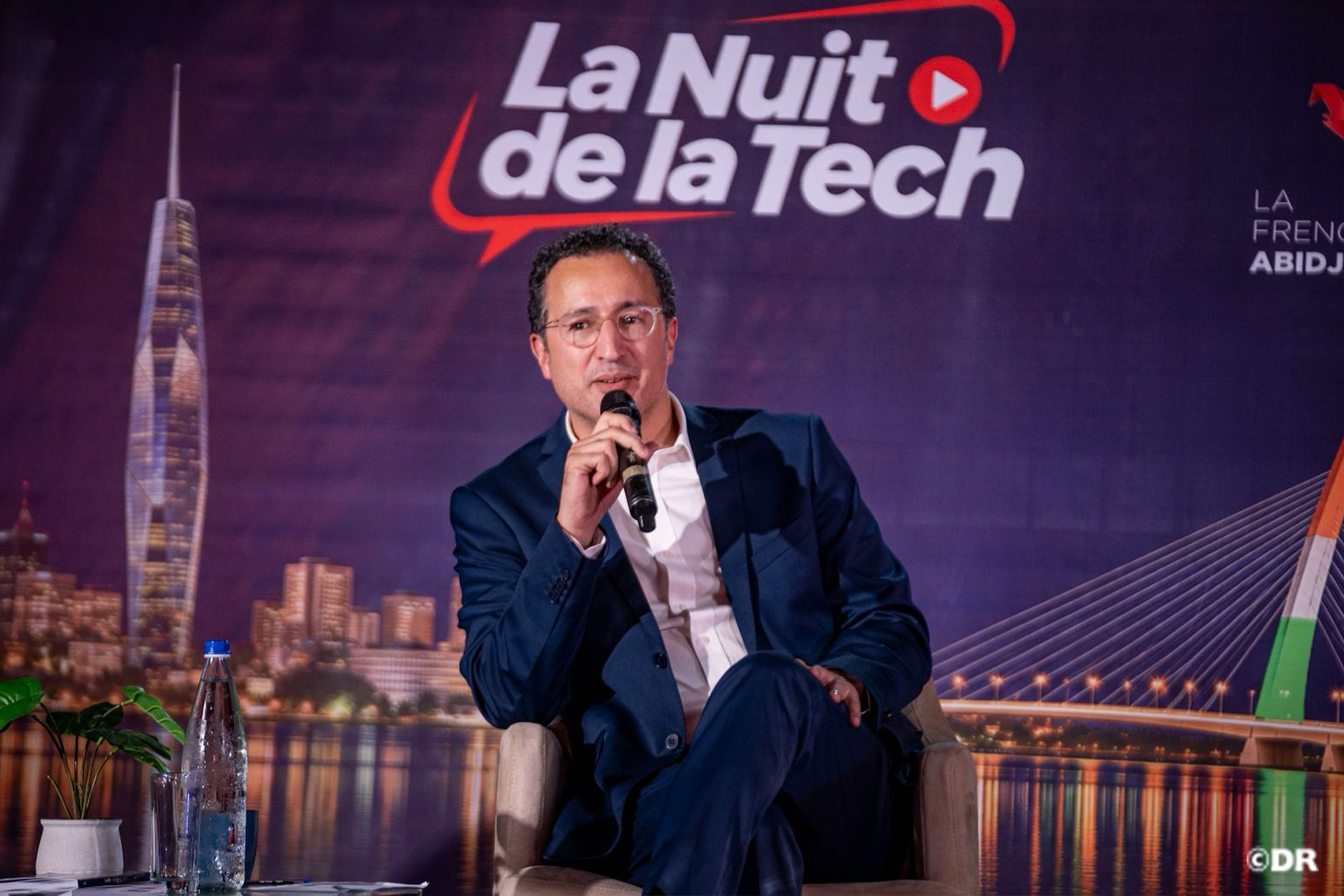
Speaking at the “Tech Night” event held on the sidelines of the forum, Morocco’s Ambassador to Côte d’Ivoire, Othman El Ferdaous, emphasized that the Kingdom possesses a comprehensive system for training technological talent. He noted that this framework is anchored by specialized engineering institutions, including the National School of Computer Science and Systems Analysis (ENSIAS), the National Institute of Posts and Telecommunications (INPT), and the Mohammadia School of Engineers (EMI).
Mr. El Ferdaous further explained that this ecosystem incorporates innovative, free, and selective training models, such as the “1337” and “YouCode Maroc” networks. He highlighted the pivotal role played by national institutions and initiatives in structuring the innovation and entrepreneurship landscape, citing Mohammed VI Polytechnic University (UM6P) through its “StartGate” and “UM6P Venture” platforms, the Caisse de Dépôt et de Gestion (CDG) via its “212 Founders” program, Tamwilcom, and the Mohammed VI Investment Fund.
Regarding financial indicators, the Ambassador reported that Moroccan startups successfully raised approximately 73 million euros in 2025. He expressed optimism for continued growth in 2026, with projections suggesting that funding volumes could exceed 130 million euros. Notably, he pointed out that nearly half of the guarantees provided by Tamwilcom to startups support projects led by founders from the Moroccan diaspora living abroad.
The diplomat also underscored the Kingdom’s advanced technological infrastructure, specifically highlighting the “Toubkal” supercomputer at Mohammed VI Polytechnic University. This high-performance computing facility currently enables African researchers and entrepreneurs to execute complex projects requiring significant computational power, particularly in the fields of artificial intelligence and agriculture.
Turning to the digital partnership between Morocco and Côte d’Ivoire, Mr. El Ferdaous emphasized the growing synergy between the innovation and entrepreneurship ecosystems of both nations. He noted the vast opportunities African markets offer to startups and tech companies, highlighting the strong prospects for deepening bilateral cooperation in the digital sector.
Mr. El Ferdaous observed that the dialogue regarding the integration of the Moroccan and Ivorian technological ecosystems has evolved beyond merely identifying opportunities. Current efforts, he explained, are focused on pinpointing practical obstacles that still hinder cooperation and developing concrete mechanisms to overcome them, thereby establishing lasting partnerships between economic and technological actors in both countries.
In this context, he announced that ten Ivorian startups are scheduled for a working visit to Morocco this coming December. As part of a program to support the startup ecosystem, this visit will allow these companies to meet with venture capital investors and explore various funding and partnership opportunities.
Furthermore, the Ambassador announced the participation of the Moroccan Federation of Information Technology, Telecommunications, and Offshoring (APEBI) in professional meetings to be held in Abidjan on January 25 and 26. The goal of this upcoming event is to transition Morocco-Ivorian cooperation from identifying potential synergies to realizing actual partnerships and practical projects on the ground.
The Ivoire Tech Forum 2026 brought together a distinguished group of public decision-makers, corporate representatives, startups, investors, and experts. The primary objective of the gathering was to transform rapid technological advancements into tangible opportunities for the benefit of African economies.