

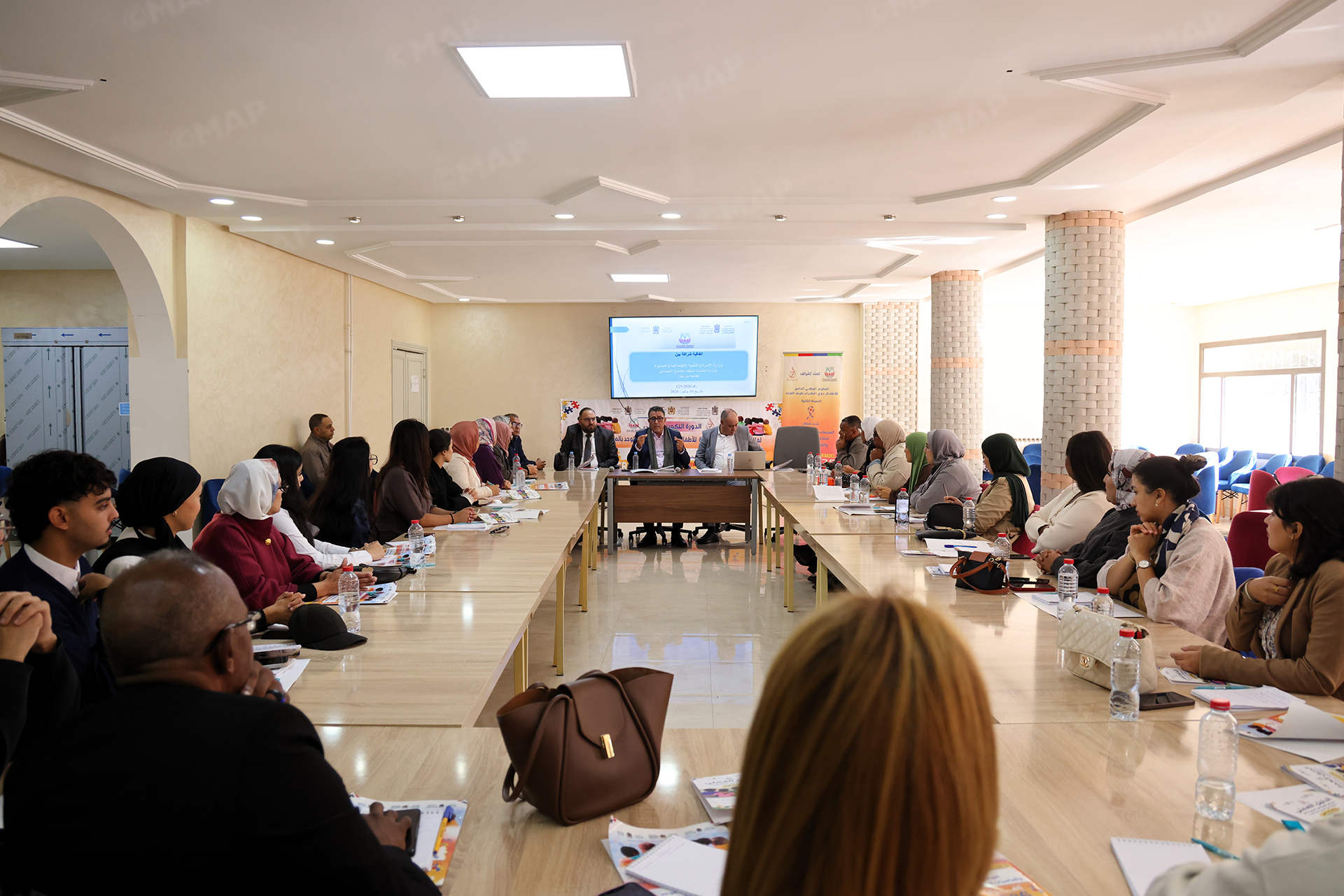
The city of Ifrane recently marked the conclusion of the first training session dedicated to preparing educational staff to support children with autism spectrum disorder. Held from November 6 to 8 under the theme “Understanding Autism Spectrum Disorder and the Fundamentals of Educational and Psychological Support,” the program aimed to bolster the capabilities of educational professionals by providing them with the necessary knowledge and skills to assist children with autism, thereby promoting their social integration.
This initiative served as a vital platform to highlight the importance of training and qualification in advancing educational and psychological support methods. It also focused on strengthening the foundations of inclusive societies that guarantee equal opportunities while respecting the specific needs and characteristics of every child.
The training session is part of ongoing preparations for upcoming inclusive summer camps and broader national efforts to enhance the integration of children with disabilities. During the event, Rachid Hamouni, Delegate Minister to the Minister of Family, Social Development, and Equality, in charge of Social Inclusion, emphasized that this session is a significant milestone in preparing the staff who will manage inclusive residencies. He noted the essential role played by institutional partners and civil society organizations, particularly associations, in achieving these strategic goals.
Minister Hamouni pointed out that while progress has been made in legislation and programs dedicated to inclusion, their real-world implementation and impact on the daily lives of beneficiaries depend on close cooperation between various stakeholders. He stressed the necessity of blending the field experience accumulated by participants with academic expertise to develop support approaches that truly meet the needs of the children involved.
Furthermore, the Minister explained that the ultimate goal is to enable children with autism to integrate into inclusive spaces that foster independence, providing them with the necessary conditions to live a normal life alongside their peers. He reminded attendees that inclusive residencies are not merely for recreation; they represent a continuation of social inclusion and support programs, aligned with the Royal Vision that grants special care to persons with disabilities.
The Minister also reviewed programs launched by the Ministry aimed at enhancing vocational training for persons with disabilities, including those with autism, and developing new professions related to social and educational support. These initiatives respond to the growing need for specialized human resources capable of keeping pace with social transformations and the increasing needs of families.
Minister Hamouni highlighted that efforts to raise awareness about autism will continue, with a third awareness campaign scheduled for the end of next March. This is alongside the strengthening of partnerships, notably with the Royal Moroccan Federation of Sports for Persons with Disabilities.
Samir El Ayadi, Deputy President of the “Mosaic” Association, stated that this training session is part of an integrated project organized in partnership with the Ministry of Social Development. The project specifically aims to train educational monitors to work within inclusive camps across the Kingdom for children with autism.
El Ayadi noted that children with autism still face a shortage of specialized supervision, particularly in the areas of entertainment, animation, and social support. He emphasized that training is a fundamental lever for improving the quality of services provided. The participants in this session included members of associations, educational professionals, teachers, students, mothers, and special education specialists.
He added that the project also involves the creation of a practical guide for educational monitors to unify intervention methods and enhance team capabilities. A second edition of this training program is expected to launch soon in preparation for the next summer season, with the goal of gradually expanding the number of children benefiting from inclusive camps.
This initiative is part of a national dynamic intended to reinforce the inclusion of children with disabilities, improving their access to educational and recreational activities and promoting their full participation in social life.