


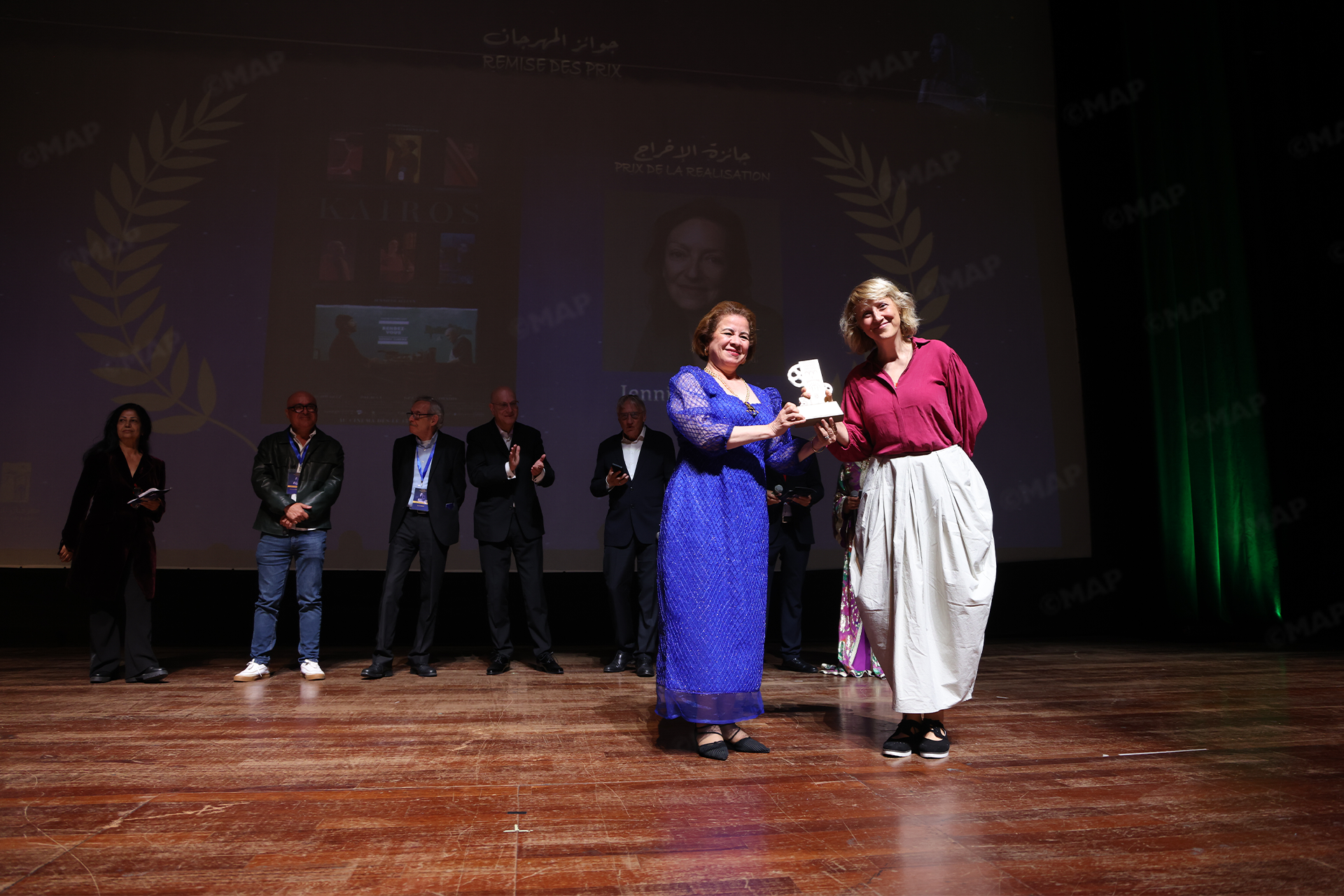
The Canadian feature film “Kairos” has emerged as the big winner at the Rabat International Author Film Festival, clinching the prestigious Grand Prize. The film tells the story of Manu, a once-famous actor who returns home after a year abroad to host a late-night radio program. Through listeners’ calls and shared experiences, his life gradually takes on a profound new meaning.
In addition to the top honor, “Kairos” made a significant impact on the awards list by securing the prizes for Best Screenplay and Best Director, as well as the International Critics’ Prize. In a video message broadcast during the closing ceremony, director Jennifer Alleyn expressed her delight at the recognition, describing the awards as motivation to continue her cinematic exploration and artistic journey.
Alleyn emphasized that in a world facing constant turmoil, there is a vital need for spaces that allow for shared reflection and contemplation. She noted that art contributes to a deeper understanding of others and fosters empathy, which she identified as society’s most essential requirement. The director also praised her time at the Rabat festival, highlighting how the films served as windows to the world and facilitated meaningful human exchanges.
Syrian director and poet Hala Mohammad, a member of the feature film jury, told Maghreb Arabe Presse (MAP) that the committee consisted of members with deep artistic ties and authentic visions of cinema, which enriched their internal dialogues. Regarding the selection criteria, she explained that the jury’s consensus was based on artistic, intellectual, and human merits, noting that cinema offers a path to salvation and hope in a complex world.
Mohammad further noted that author cinema provides filmmakers with the independence to express personal artistic visions. She stated that the importance of this genre lies in its adherence to individual intellectual standards, which sparks passion and curiosity in the audience.
Other major awards in the feature film category included Best Actor for Valerio Mastandrea in the Italian film “Armoni” (directed by Dario Albertini) and Best Actress for Yuki Katayama for her role in the Japanese film “Fujiko” (directed by Taichi Kimura). The Jury Prize was awarded to “Yunan” by director Amir Fakhr Eddine, a co-production between Canada, Germany, and Italy, while the Russian film “Monologue” by Asan Tamaev won the Audience Award.
In the documentary competition, “Soraya Habibi” by Lebanese director Nicolas Khoury was named Best Documentary. The Jury Prize went to “Are You Mostafa?” by Iranian filmmaker Baktash Abtin, with a special mention for the German-Portuguese film “The Seasons” by Maureen Fazendeiro.
The short film competition saw Lebanese director Samir Jihad Siriani win Best Short Narrative for “And What if They Bomb Here Tonight?”, while Iranian director Nima Nasaj took Best Short Documentary for “Fruits of Despair.” The Best Short Animation award went to “Because Today is Saturday” by Portuguese director Alice Eça Guimarães, and Moroccan director Randa Maroufi won Best Experimental Short for “Al-Mina.”
Zakaria Denia’s “Tora” received the award for Best Moroccan Short Film. Special mentions were given to the Mexican film “Voices from the Deep” by Irving Serrano and Victor Rejon, and the narrative film “Touch” by Iranian director Mohammad Davoodi Kia.
In the “Morocco Shorts” category, Fatima Zahra Oubahha won Best Moroccan Film for “Wachm Bazza,” while Azeddine El Ouardi’s “Henna” took second place. Internationally, the Best Narrative Film award went to the Chinese film “Guanyin Hostel” by Qiankao Xiao, while Bisan Owda’s “Free Fish” won Best Documentary. The Best Animation award was given to “A Very Small Trip” by Korean director Lee Jin-woo, and Pakistani director Nada Mahboob’s “The Night That Took Everything” won Best Experimental Film. Special mentions were also awarded to “Broken Dawn” by Hai Oh Park and “Castle for Salome” by Aliénor Marin.
The closing ceremony also honored Italian director and screenwriter Mimmo Calopresti, who chaired the international jury, for his career contributions to the seventh art. This edition featured over 120 films from more than 40 countries. Over seven days, the festival provided a platform for professionals and the public to explore international author cinema through competitions, workshops, and discussions. The 31st edition also paid tribute to the late Moroccan director Mohamed Ahed Bensouda, honoring his legacy in Moroccan cinema.