




Three years after the September 2023 Al Haouz earthquake, the mountain village of Ibaraghen has inaugurated a tourist lodge designed to support the local economy. Led by ACOMS in partnership with Moroccan association Jood and local residents, the initiative combines traditional craftsmanship, mountain tourism and the preservation of local architectural heritage.
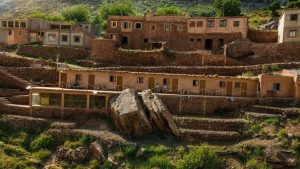
High in Morocco’s High Atlas Mountains, at an altitude of more than 2,300 metres, the village of Ibaraghen is entering a new chapter. On Monday, 28 September 2026, the official inauguration of Les Loges d’Ibaraghen marked the culmination of a project launched in the aftermath of the earthquake that struck Al Haouz province in September 2023.
The initiative was conceived with a clear objective: to move beyond emergency relief and turn solidarity into a long-term opportunity for development. The Association of Moroccans in Switzerland (ACOMS), working alongside Moroccan association Jood and local residents, opted for an approach intended to contribute to the village’s economic and social recovery.
The project involves giving temporary housing units used in the aftermath of the earthquake a second life by converting them into tourist accommodation. In doing so, it seeks to link reconstruction with local economic development while making greater use of the region’s resources and skills.
From temporary shelters to tourist accommodation
The project began to take shape in late 2024, when ACOMS signed a partnership agreement with Jood, an association actively involved in supporting communities affected by the earthquake.
The initial stages focused on architectural design, followed by construction and refurbishment work. Local materials, including stone, bricks and woven reeds, played a central role in the process. The aim was to transform the original structures so that they would blend into the mountainous landscape and reflect the region’s traditional earthen architecture, known as pisé.
The project also faced the practical challenges of working in a remote mountain environment. In February 2026, heavy snowfall left the village inaccessible for nearly three months, forcing work to be temporarily suspended. Once access was restored, the team resumed the finishing work and completed the lodge.
The accommodation includes six bedrooms, a technical room, a lounge and reading area opening onto the landscape through a large panoramic window, two toilets, a shower room and a spacious kitchen. Its design seeks to provide visitors with comfort while remaining in harmony with the surrounding landscape and local architectural traditions.
Local residents at the heart of the project
Beyond the physical construction, the initiative relies on the involvement of local stakeholders. Jood played a central role thanks to its knowledge of the area and its close relationships with the communities affected by the earthquake.
Residents have also contributed to giving the project a strong collective dimension. Traditional stonework, locally sourced materials and artisanal techniques are central to an approach that seeks to create opportunities from within the community itself.
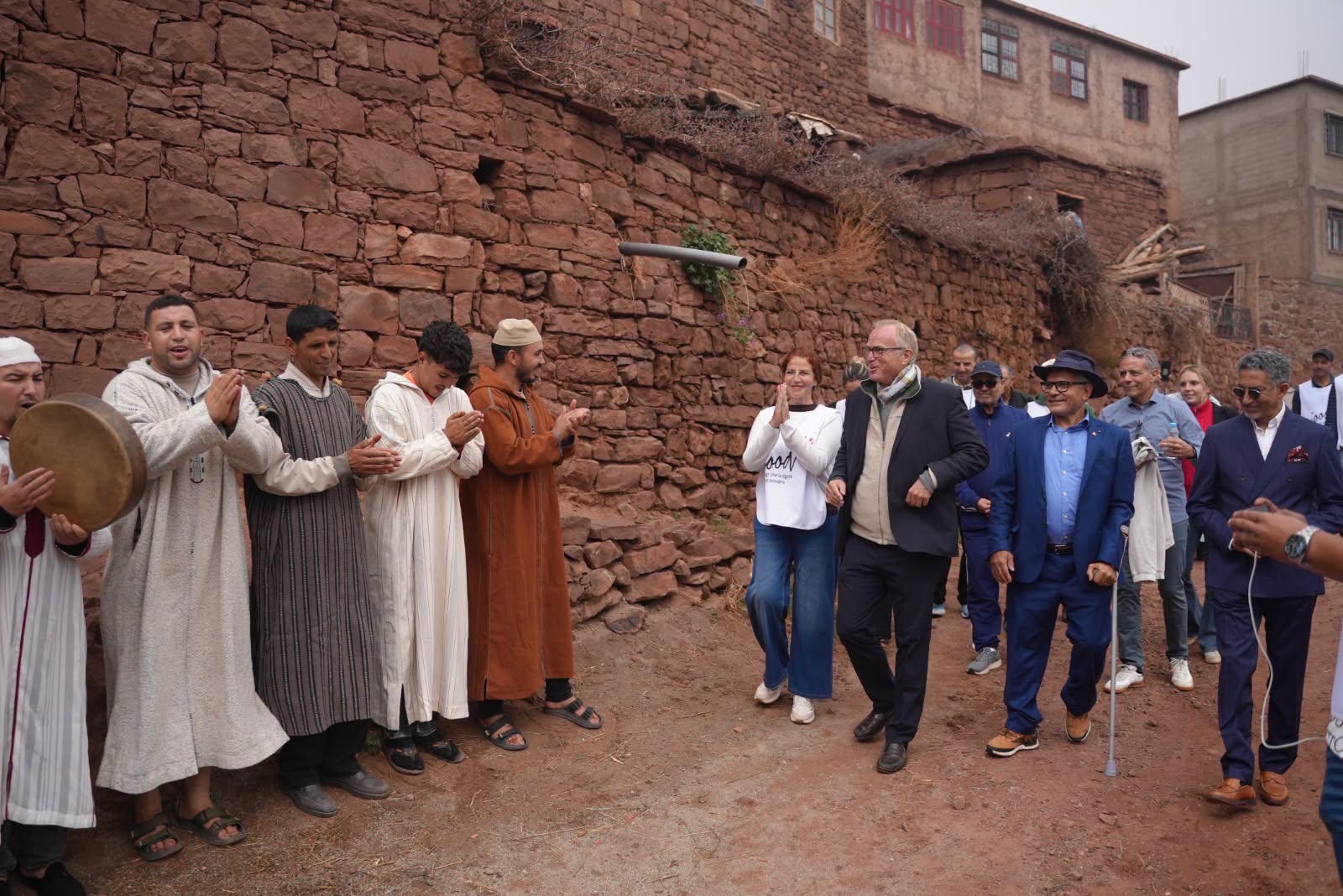
The inauguration was attended by Switzerland’s Ambassador to Morocco, H.E. Valentin Zellweger. His presence highlighted the international solidarity underpinning the initiative. The reception, accompanied by traditional Atlas songs, also reflected the residents’ pride in their cultural identity.
The project has received support from members, donors and partners in both Switzerland and Morocco. Their contributions have helped channel the solidarity generated by the disaster into a longer-term initiative focused on the village’s future.
Tourism as a driver of the local economy
Located approximately six kilometres from the Oukaïmeden ski resort and around an hour and a half from Marrakech, the lodge benefits from a location with significant tourism potential. The High Atlas landscape, natural surroundings and proximity to a mountain resort offer opportunities to attract visitors during different seasons.
According to information provided by the project organisers, the lodge has already begun receiving its first bookings. The initiative aims to generate economic benefits for the village through job creation, the promotion of local craftsmanship and the development of services linked to tourism and hospitality.
Another area explored during the project was a potential collaboration with Mohammed VI Polytechnic University, particularly its hospitality school developed in partnership with EHL Hospitality Business School in Lausanne. The objective was to examine a management model adapted to the lodge’s needs and the specific conditions of the local area.
The project’s economic and social impact will need to be assessed over time as the accommodation establishes its operations. Job creation, the development of a women’s cooperative and new opportunities for young people are among the ambitions identified by its organisers.
Rebuilding the future while preserving local identity
The inauguration of Les Loges d’Ibaraghen represents more than the completion of a construction project. It marks the beginning of a new phase for a community seeking to rebuild its economic prospects after a disaster that had profound consequences across the region.
The challenge now is to establish a viable tourism model that generates income for local residents without undermining the heritage and traditions that make the High Atlas distinctive.
In Ibaraghen, reconstruction is taking on a broader meaning: that of a community seeking to build new opportunities by drawing on its own resources, the commitment of its residents and the strength of its cultural identity.
For travellers, visiting the lodge can also offer an opportunity to discover mountain life, experience local traditions and contribute to the village’s economy through their stay.