

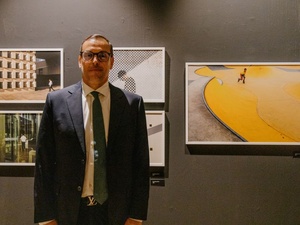
By Brahim Ould Errachid
Member of the National Council of the Istiqlal Party
There are loyalties that the twists and turns of history cannot shake, nor can political circumstances subject them to their own changing interests. There are also bonds of belonging whose legitimacy stems from a memory older than diplomatic disputes and a sense of identity deeper than ideological constructions.
The bond linking Moroccan Sahrawis to the Glorious Alaouite Throne belongs to this historical continuity. It is a historical and human reality whose depth cannot be fully understood through a purely geopolitical perspective.
As a Sahrawi deeply committed to the Moroccan identity of the Sahara and to the sovereignty of my country, I believe that our defence of the Kingdom’s territorial integrity is neither circumstantial nor motivated by political convenience. It draws its strength from a shared history, derives its legitimacy from the continuity of the Moroccan state and finds its highest expression in our unwavering loyalty to the Glorious Alaouite Throne and His Majesty King Mohammed VI, may God assist and glorify Him.
This loyalty has a depth that contemporary circumstances alone cannot explain.
It is rooted in the centuries-old relationship between Sahrawi tribes and the Sultans of Morocco. It reflects the tradition of Bay’a, which for centuries has been one of the foundations of our political organisation and understanding of legitimacy. Bay’a cannot be reduced to a ceremonial practice or a simple expression of deference.
It embodies a historical conception of authority and a reciprocal commitment whose imprint remains in collective memory. Successive pledges of allegiance, ancestral solidarity, spiritual ties and dynastic loyalties form part of a shared heritage that the challenges of history have never erased.
For many Sahrawi families, the monarchy is not a distant institution whose authority was imposed upon an already existing identity. It is one of the oldest expressions of their belonging to the Moroccan national community.
However, looking exclusively to the past would be insufficient to explain the reasons behind our present commitment. The Moroccan identity of the Sahara is not merely an inheritance entrusted to us; it is also a responsibility that we must assume.
It is a reality that every generation is called upon to preserve and that we help sustain through our daily lives.
Sahrawis who support national unity are not spectators of an issue whose future is decided exclusively in foreign capitals. We are active participants. We understand its human dimensions and social implications, and we are fully aware of the consequences it has had for families and the balance of our region.
For decades, elected representatives from the southern provinces, tribal representatives, community leaders, political figures, associations, women and young people have contributed to consolidating this national belonging. Their commitment must neither be underestimated nor reduced to a mere endorsement of the Kingdom’s official position.
It represents an independent political and historical contribution. It gives the defence of territorial integrity a popular dimension and human depth without which any project of national consolidation would remain incomplete.
The Green March of November 1975 remains, in this regard, one of the founding events of our contemporary history. Under the leadership of the late His Majesty King Hassan II, may God rest his soul, that mobilisation gave extraordinary expression to the national will to recover the Saharan provinces.
Fifty years later, the commemorations of 2025 recalled the importance of that legacy and the sacrifices made in defence of territorial unity. But they also highlighted a decisive transformation: the era of historical claims has gradually given way to a process of political and territorial development designed to consolidate national achievements and carry them into the future.
It is precisely in this connection between inherited legitimacy and present-day responsibility that the vision of His Majesty King Mohammed VI becomes apparent.
During His reign, the national cause has acquired a new diplomatic dimension, accompanied by a development policy aimed at transforming the southern provinces into an area of stability and prosperity.
Autonomy: A proposal to overcome decades of confrontation
Morocco’s presentation, on 11 April 2007, of the Initiative for Negotiating an Autonomy Statute for the Sahara Region marked a turning point in the search for a political solution.
The proposal provided an institutional response to the Kingdom’s determination to overcome a conflict prolonged by decades of confrontation and opposing positions.
It is based on a demanding conception of regional autonomy, exercised within the framework of national sovereignty and respect for territorial integrity.
Its significance lies not only in the search for a diplomatic compromise. It also offers a political framework through which the populations concerned can participate fully in the management of their local affairs while preserving the sovereign powers of the State.
Democratic representation and the recognition of cultural particularities must find their full expression within this framework. The accountability of territorial institutions and the protection of rights are equally fundamental elements.
Morocco has therefore chosen a political path intended to reconcile the effective exercise of regional responsibilities with the continuity of its constitutional unity.
The adoption of United Nations Security Council Resolution 2797 on 31 October 2025 represented a particularly important diplomatic milestone.
The text extended the MINURSO mandate until 31 October 2026 and called on the parties to engage in discussions on the basis of the autonomy plan presented by Morocco.
The resolution considered that genuine autonomy could represent one of the most viable solutions. This development placed the Moroccan initiative at the centre of the negotiation framework and strengthened its relevance in the search for a political settlement.
For our country, it represented the result of patient diplomacy conducted under the High Authority of His Majesty King Mohammed VI, based on both consistency in principles and prudence in action.
It also confirmed that the credibility of a diplomatic proposal is measured by its ability to change the parameters of a conflict and create viable institutional prospects.
The historic speech delivered by His Majesty King Mohammed VI to His loyal people on 31 October 2025 occupies a special place in this development. Through its political significance and the depth of its orientations, the Royal address gave that diplomatic achievement an extraordinary national dimension.
The Sovereign announced the opening of a new chapter in the process of consolidating the Moroccan identity of the Sahara and stated that the Autonomy Initiative should serve as the basis for reaching a consensual and definitive solution.
By establishing a distinction between the period before and after 31 October 2025, His Majesty placed that moment within a historical perspective that goes beyond the ordinary fluctuations of diplomacy. For those of us who support national unity, that speech represented much more than the announcement of a diplomatic achievement.
It expressed a vision of the country’s future in which the consolidation of sovereignty goes hand in hand with political responsibility and the pursuit of lasting reconciliation.
Reconciliation: Another dimension of national victory
The importance of that Royal address also lies in the conception of national victory it conveyed.
His Majesty the King emphasised that Morocco did not seek to fuel confrontation or deepen divisions and remained committed to a solution that would preserve the dignity of all parties.
This approach deserves particular attention. It reflects a high conception of State responsibility, one that does not confuse firmness in defending principles with the perpetuation of resentment.
It also reminds us that a nation confident in its foundations can pursue reconciliation without renouncing its rights.
This vision gives Moroccan policy a human dimension that must remain present at every stage ahead. The significance of a national cause is not measured solely by the recognition it receives or the diplomatic positions it consolidates.
It is also measured by its ability to create the conditions for reconciliation and offer everyone wishing to participate in common national life a future based on dignity and security.
The solemn appeal addressed in that same speech to our brothers living in the Tindouf camps remains particularly significant.
His Majesty the King invited them to seize the historic opportunity offered by the Autonomy Initiative to reunite with their families, participate in the management of local affairs and contribute to the development of their homeland.
The Sovereign reaffirmed the principle of equality among all Moroccans and guaranteed that those returning from the camps would enjoy the same rights as their fellow citizens.
In my view, this is one of the most important messages of the Royal speech.
Human dignity occupies a central place in this national vision. It reflects the desire to reunite families and overcome divisions accumulated over decades. It also gives reconciliation a concrete meaning and a legitimacy that stems directly from the moral and constitutional authority of the Sovereign.
The same speech reiterated Morocco’s willingness to engage in sincere and fraternal dialogue with Algeria in order to pave the way for relations based on trust and good neighbourliness.
This gesture confirms a Royal approach that does not separate the defence of the Kingdom’s fundamental interests from the pursuit of regional stability.
The future of the Maghreb cannot remain indefinitely condemned to the confrontations inherited from previous decades. The peoples of this region share a common geography and economic and social aspirations that make cooperation essential.
Defending our national unity does not imply hostility towards neighbouring peoples. On the contrary, it requires us to defend our country’s legitimate interests with determination while preserving opportunities for peaceful coexistence and mutually beneficial regional development.
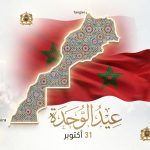
31 October: A new reference point for national unity
The establishment of 31 October as Unity Day, by decision of His Majesty King Mohammed VI announced on 4 November 2025, gave this new stage symbolic and institutional continuity.
The choice of this date was not simply the creation of another commemorative occasion. It reflects the desire to incorporate the achievements of the national cause into the Kingdom’s civic heritage.
The day connects the memory of past sacrifices with an awareness of future responsibilities. It reminds us that national cohesion is a continuous undertaking, whose legacy each generation inherits and whose continuity it must safeguard.
For Sahrawi communities deeply attached to the Alaouite Throne, this celebration carries a special meaning. It reaffirms their place within the wider Nation and their belonging to a shared destiny that historical challenges have helped strengthen.
The new diplomatic landscape has also been accompanied by a significant consolidation of international support for Morocco’s proposal.
The recognition by the United States of Morocco’s sovereignty over the Sahara in December 2020 represented a particularly significant step. This position was reaffirmed in the message sent by President Donald Trump to His Majesty King Mohammed VI on the occasion of the 2026 Throne Day, made public on 1 August.
France has also adopted a position placing the present and future of the Sahara within the framework of Moroccan sovereignty.
The United Kingdom has expressed its support for the Autonomy Initiative as a credible and pragmatic basis for a lasting settlement.
Spain, for its part, has recognised the seriousness and realism of this proposal as a basis for seeking a political solution.
These positions differ in their diplomatic wording and formulations. Nevertheless, their convergence reflects the growing importance of Morocco’s approach in international relations and the interest in a solution based on institutional stability and cooperation.
Development in the southern provinces: The tangible dimension of sovereignty
This diplomatic momentum cannot be separated from the economic transformation of the southern provinces.
Moroccan diplomacy has consistently linked the defence of sovereignty with the promotion of investment and the integration of Saharan territories into regional economic exchanges.
The New Development Model for the Southern Provinces, launched in November 2015 under the leadership of His Majesty King Mohammed VI, opened up new prospects in infrastructure, public facilities, the development of resources and capacity-building.
Improvements to road networks, port projects and investment in renewable energy are all part of this strategy.
The Dakhla Atlantic Port project is one of its most significant expressions. It represents the geoeconomic role that Morocco intends to develop for its Saharan provinces by integrating them into major commercial routes connecting the Atlantic with the African hinterland.
The development of these territories is not a secondary element of the national cause. It is one of its most tangible expressions.
The speech delivered by His Majesty King Mohammed VI before Parliament on 9 October 2026 provided a particularly relevant perspective on this issue.
By recalling that national pride must be translated into responsibility and duty, the Sovereign set out an expectation that directly concerns the future of our southern provinces.
He stressed the need to strengthen social and territorial justice and effectively improve public services. He placed territorial development and the resolution of citizens’ everyday problems among the country’s national priorities.
He also called for accelerating administrative deconcentration and strengthening the decision-making and implementation capacities of regional institutions.
These guidelines are of considerable importance to the Sahara issue. They remind us that strengthening national belonging must go hand in hand with genuine participation in public affairs and a perceptible improvement in living conditions.
They call on local officials to regard their positions not as privileges but as responsibilities towards citizens and history.
It is from this understanding of responsibility that the events at the United Nations Security Council on 30 October 2026 must be examined.
Meeting to consider the future of MINURSO, the Council failed to adopt either of the two draft resolutions submitted for consideration.
The text presented by the United States received eleven votes in favour but was vetoed by the Russian Federation.
The alternative draft presented by Russia received only three votes in favour and did not secure the required majority. With no extension approved, MINURSO’s mandate expired on 31 October 2026.
This outcome marked the end of a 35-year cycle during which the Mission had accompanied the various stages of the United Nations framework established in 1991.
It also opened a new phase whose political significance must be assessed in light of the changes that have taken place in the international handling of the Sahara issue.
The Royal Cabinet statement and the closing of a chapter
The statement issued by the Royal Cabinet on 30 October 2026 gave this development its meaning within the Kingdom’s diplomatic doctrine.
Morocco considered the non-renewal of MINURSO’s mandate a major development and a particularly significant step towards the definitive closure of the Moroccan Sahara file within the United Nations.
The statement presented this development as the end of a 35-year chapter and as a break with an approach that, in the Kingdom’s view, no longer reflected the current parameters of the dispute.
It also indicated that Morocco considered this development should lead to the end of the Mission’s presence in the southern provinces and to the conclusion of the Security Council’s periodic examination of the issue.
Morocco’s position was expressed without ambiguity.
It stems from the conviction that successive diplomatic achievements and the recognition given to the Autonomy Initiative require a profound transformation of the framework through which the dispute has been addressed for several decades.
The statement carries particular political significance because it directly connects with the direction set out by the King in His speech of 31 October 2025.
The continuity between these two moments is clear. The Royal speech announced the opening of a new chapter and the need to move beyond the logic of merely managing the dispute. The statement of 30 October 2026 placed the latest institutional developments within that same perspective of transformation.
Moroccan diplomacy is thus reaffirming its determination to ensure that the future of the southern provinces is no longer shaped by mechanisms inherited from an earlier historical context.
This determination remains linked to the Kingdom’s commitment to preserving the ceasefire and ensuring the security of its citizens. It is also accompanied by the continuation of a bilateral and regional diplomatic strategy that His Majesty King Mohammed VI has placed among the priorities of His leadership.
According to the assessment expressed by the Royal Cabinet, more than two-thirds of United Nations member states now support autonomy under Moroccan sovereignty as a framework for resolving the dispute.
This official assessment illustrates the extent of the support that the Kingdom intends to consolidate in the next phase.
Nevertheless, we must understand that major diplomatic achievements cannot be an end in themselves. Their real value must be measured by the changes they bring to people’s lives.
The Moroccan Sahara cannot be viewed exclusively as a territory where sovereignty is asserted. It must also become a benchmark for territorial governance, democratic participation, social justice and human development.
The people of Laayoune and Dakhla, as well as those of Smara and Boujdour, must be able to see tangible results of the national commitment in public policies.
Access to quality education and appropriate training, the promotion of youth employment, support for private initiative, protection of Hassani cultural heritage and improvements in essential public services are among the requirements that give national belonging meaning in everyday life.
Loyalty to the Alaouite Throne also finds its noblest expression in the commitment to improving the living standards of our fellow citizens.
Sahrawi supporters of national unity and their historic responsibility
From this perspective, Sahrawis who support national unity have a historic responsibility that would be unwise to underestimate.
Our knowledge of local realities and our deep roots in the social structures of the southern provinces constitute valuable human and political capital.
Elected representatives, administrative officials, academics and entrepreneurs from these territories must be fully involved in designing and implementing the policies that will determine their future.
Genuine autonomy cannot be limited to an institutional structure without democratic substance. It requires a culture of responsibility and transparency, a clear distribution of powers and effective citizen participation in public decision-making.
It also requires the emergence of a new generation of leaders capable of reconciling loyalty to the Nation’s fundamental principles with modern, rigorous and effective territorial governance.
The issue of Tindouf remains inseparable from this responsibility.
Behind decades of diplomatic confrontation lies a human reality that no institutional speech can fully capture. Families have been separated, generations have grown up far from one another, and family ties and ancestral solidarity have endured the consequences of prolonged division.
I remain convinced that any prospect of national reconciliation must give a central place to our brothers and relatives living in the camps.
Their possible return to their homeland must take place under conditions that fully respect their dignity and rights.
A genuine reintegration policy should provide the administrative and social resources necessary to facilitate their reception. It should promote access to housing and education, support professional integration and guarantee their participation in public life.
Reconciliation cannot remain an abstract aspiration. It must become a human project built on concrete guarantees and the gradual restoration of trust.
In this regard, the position expressed by His Majesty King Mohammed VI in His speech of 31 October 2025 must remain our moral and political reference. The affirmation of equality among all Moroccans and the call for national unity outline an approach that rejects the idea of making division a permanent legacy.
The reconciliation we advocate should not be understood as erasing memory or denying past suffering. It should enable those separated by history to recover a shared sense of belonging and contribute freely to its future.
Sahrawi supporters of national unity can play a decisive role in this undertaking. Our family and tribal ties, together with our understanding of local sensitivities, can facilitate dialogue and help rebuild human connections.
Such an approach would remain faithful to Morocco’s tradition of unity and to the Royal determination to preserve the dignity of all citizens.
Our commitment to His Majesty King Mohammed VI is not limited to an expression of sentiment. It is also a responsibility that must be translated into action.
It obliges us to defend national unity while contributing to the construction of effective and equitable institutions.
It requires us to promote social cohesion and preserve the conditions for peaceful coexistence. It calls on us to place the general interest above private interests and to prevent local rivalries from weakening the opportunities created by national progress.
The Alaouite monarchy continues to represent, in our understanding of the State, the symbol of historical continuity and the principal unifying force of the national community. Its authority finds an essential extension in the commitment of citizens who, through their work and integrity, contribute to the country’s prosperity.
A new era requires us to rise to the occasion
I am fully aware of what the transformations of 2025 and 2026 represent for our generation.
They place us before a demand for political maturity and a duty to remain clear-sighted.
Morocco has strengthened its diplomatic position and reaffirmed the central role of its Autonomy Initiative. It has also given a new institutional and symbolic dimension to the cause of territorial integrity. Through the voice of its Sovereign, it has expressed a vision of the country’s future that combines firmness in principle with a commitment to reconciliation.
It is now our responsibility to live up to that ambition.
Sahrawi communities must not simply be mentioned in international declarations. They must participate fully in achieving the objectives our country has set for itself. Their historic commitment deserves recognition, and their future contribution must have a place in every sphere of national life.
The future of the Moroccan Sahara will not be written solely in diplomatic forums or in the archives of international institutions. It will be built in our cities and provinces, in schools and universities, and in businesses.
It will be reflected in the quality of institutions and in citizens’ trust. It will be strengthened through the protection of our cultural heritage and the creation of new opportunities for younger generations. Ultimately, its noblest expression will lie in the ability to reunite families and transform the diversity of their experiences into an asset for the entire national community.
As a Moroccan Sahrawi deeply attached to my identity and history, I remain convinced that our loyalty to the Glorious Alaouite Throne is a commitment of conscience and a responsibility towards future generations.
Under the leadership of His Majesty King Mohammed VI, the Kingdom continues a historic undertaking whose foundations are the continuity of the State, national sovereignty, human dignity and the pursuit of shared prosperity.
It is to this undertaking that we wish to contribute with consistency and responsibility.
Our Moroccan identity is neither a temporary claim nor a feeling that can change with political circumstances. It is our heritage and our commitment. It is the memory of our ancestors and the promise we make to our children.
It is a profound loyalty passed down through generations, finding its highest expression in the Bay’a to the August Alaouite Throne and in our attachment to the Nation.
The Moroccan Sahara is part of this historical continuity that we have a duty to preserve and of this collective ambition that we are responsible for bringing to fruition.
Through loyalty to the King, commitment to hard work, the defence of human dignity and the pursuit of reconciliation, we will continue to contribute to building a united and prosperous Morocco — a country whose greatness is measured as much by the firmness of its convictions as by the generosity of its national vision.
Brahim Ould Errachid
Member of the National Council of the Istiqlal Party


