





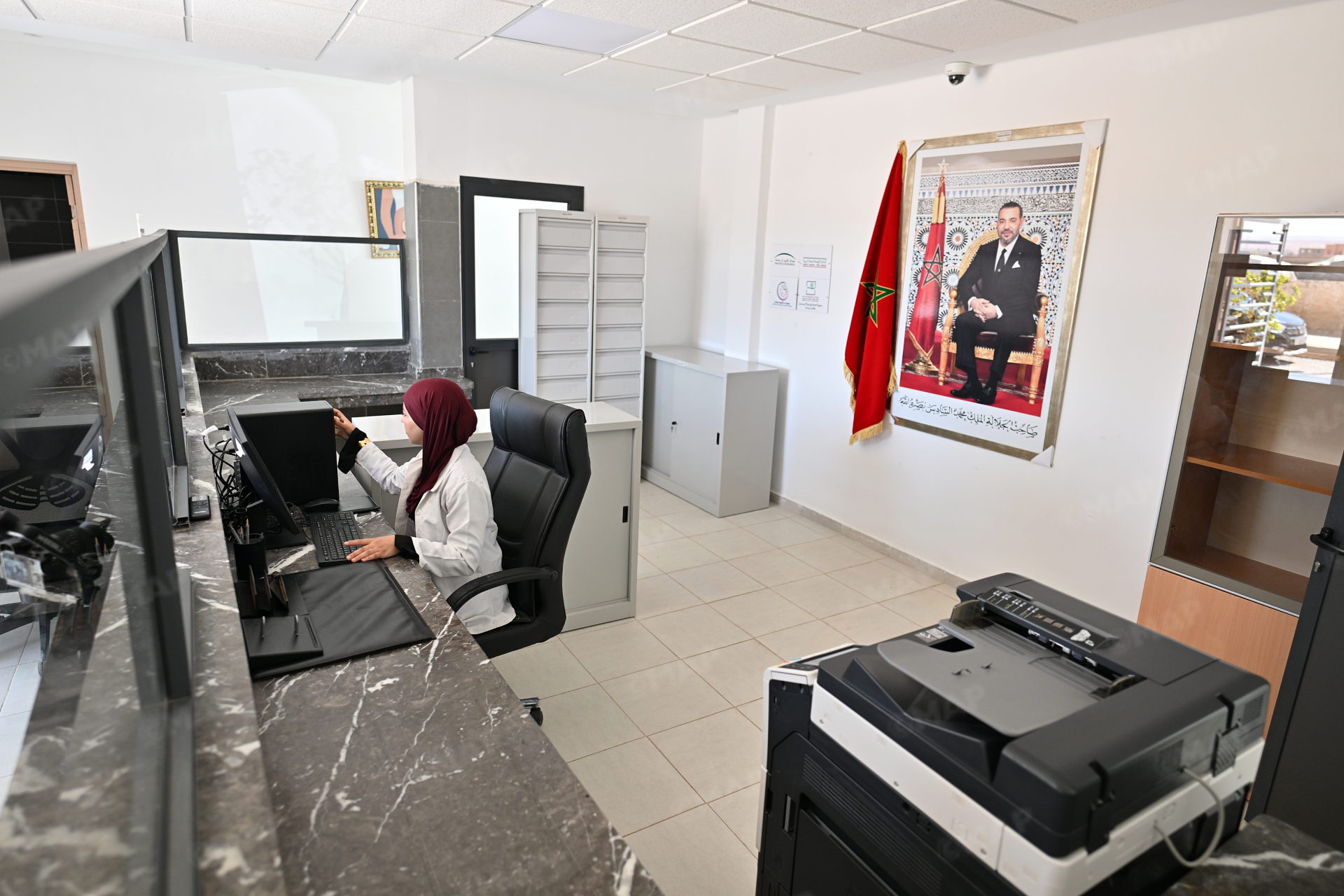
The Bouchane Maternity Home in Rehamna stands as a vital social infrastructure dedicated to improving maternal health in rural settings. Fully funded by the National Initiative for Human Development (INDH) with a budget of approximately 3 million dirhams, this facility embodies a sustained commitment to enhancing living conditions for rural women and ensuring their access to essential services, particularly healthcare, through development programs that prioritize women’s needs.
This local facility provides pregnant women with comprehensive support both before and after childbirth in an appropriate environment. By bringing healthcare services closer to the rural population, the center plays a key role in strengthening awareness and prevention efforts specifically designed for the well-being of both mothers and children.
These efforts are part of a collaborative approach involving the INDH, the Provincial Delegation of Health and Social Protection, and local partner associations. Together, they aim to bolster health services and implement local mechanisms for guidance and support.
Among these initiatives is the community mediator system. These mediators play an essential role in bridging the gap between families and health services, ensuring that vital information reaches women and their households effectively.
Hajar Bala, Director of the Bouchane Maternity Home, explained in a statement to the Maghreb Arab Press (MAP) that the facility ensures pregnant women are cared for during the pre- and post-natal periods. This includes providing accommodation, nutrition, and all necessary conditions to ensure their comfort. “The goal is to guarantee the safety of both the mother and the child,” she emphasized.
Community mediator Laila Kahlaoui detailed her mission as focusing on awareness, guidance, and support, particularly for pregnant women and new mothers. She encourages them to monitor their pregnancies, utilize professional healthcare services, and give birth under safe conditions. Furthermore, she educates families on the critical importance of healthcare during the first 1,000 days of a child’s life.
Kahlaoui added that this system is particularly significant in rural areas, as it facilitates health communication for families and simplifies interactions with medical institutions. It also allows for directing women toward available services and supporting them when needed, especially in utilizing the resources provided by maternity homes.
The INDH’s commitment to women extends beyond the healthcare sector. The initiative also supports startups and establishes training programs, providing technical and financial accompaniment for female project carriers to foster broader human development.