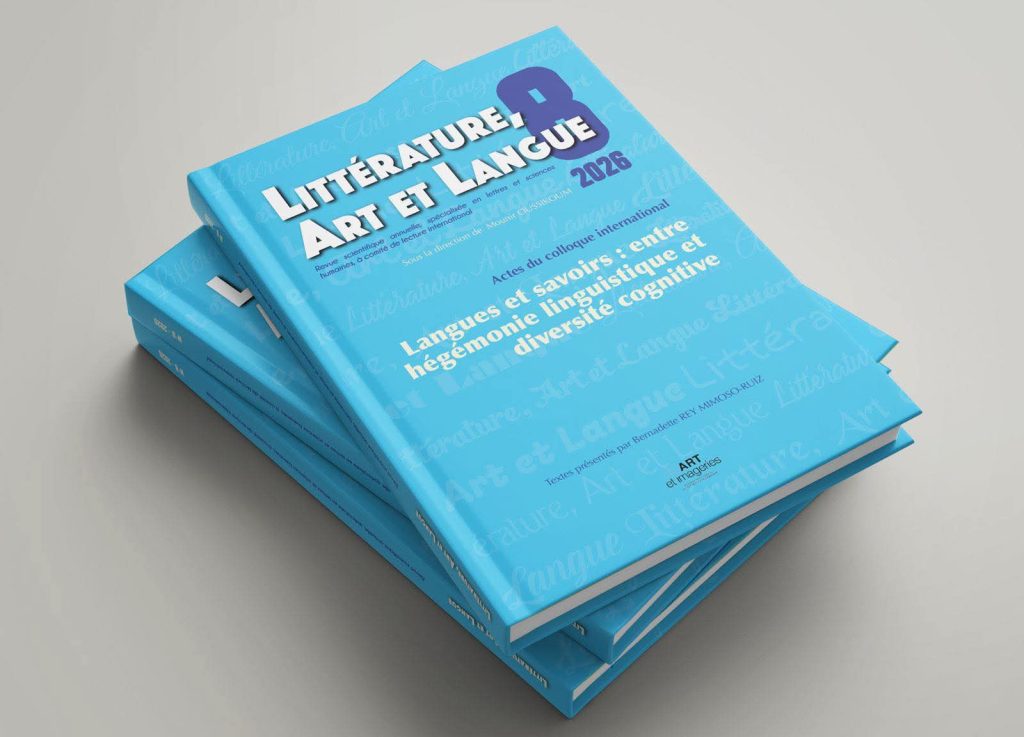





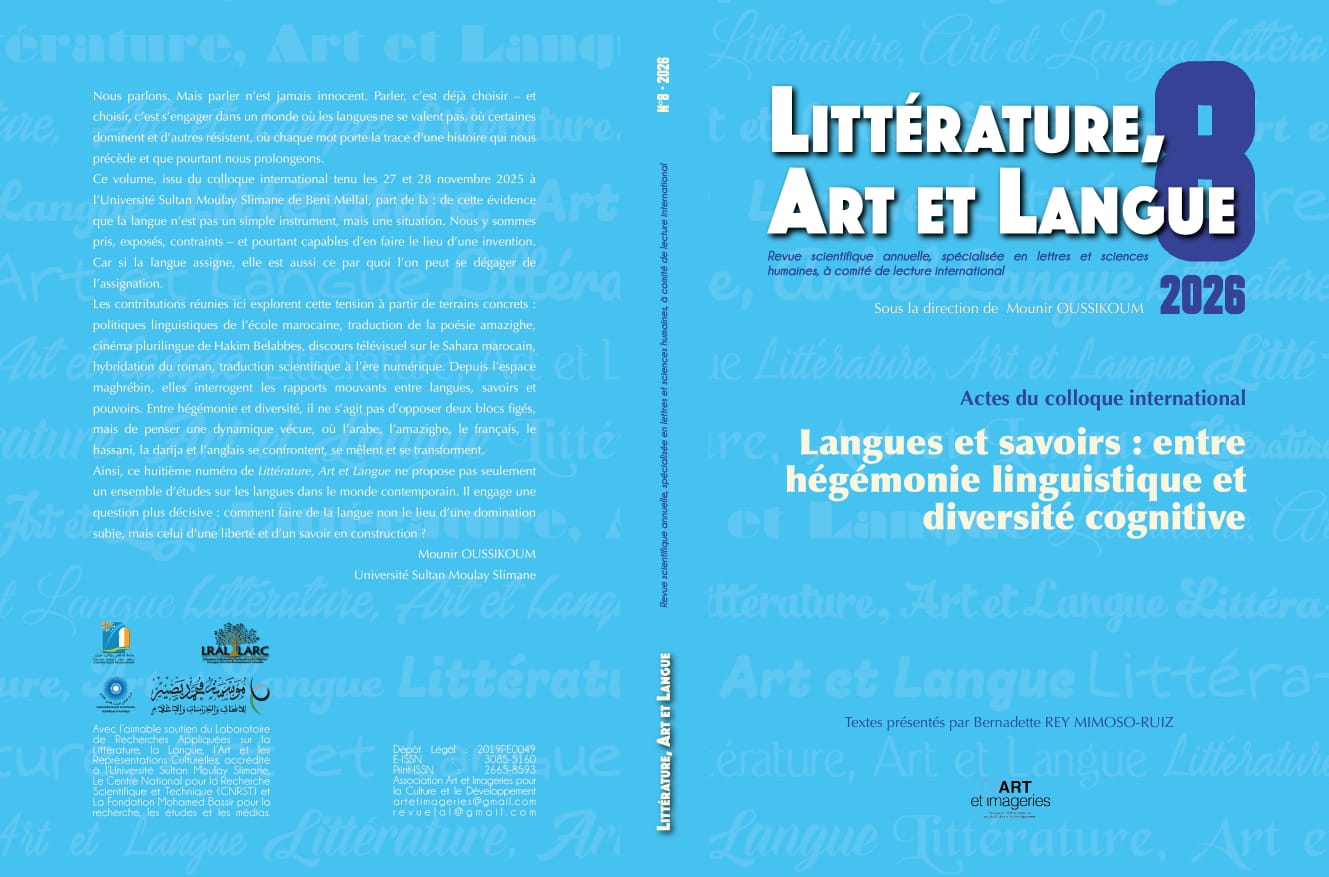
The academic journal Littérature, Art et Langue has published its eighth issue, directed by Professor Mounir Oussikoum from Sultan Moulay Slimane University and supported by the Laboratory of Applied Research on Literature, Language, Art, and Cultural Representations. Published by Art et Imageries, the volume carries the title “Langues et savoirs: between linguistic hegemony and cognitive diversity.” This bilingual edition in French and Arabic features 43 contributions from researchers in Europe and Africa. It examines the interplay of languages, knowledge, and identities amid digital technologies and cultural shifts.
Scholars address sociolinguistics in the context of digital globalization. They analyze the growing dominance of English, challenges in preserving minority languages, and impacts of artificial intelligence on linguistic diversity. Contributors advocate for “cognitive justice” through recognition of national and vernacular languages, including Amazigh and Moroccan Arabic. The issue highlights how these languages sustain unique worldviews and resist homogenization.
Translation emerges as a core theme, with studies on cultural and linguistic transfers in literature, sacred texts, and medical communication. Authors critique limitations of machine translation and emphasize the translator’s role as a cultural mediator who preserves symbolic depth. These analyses reveal persistent barriers in conveying nuances across languages, particularly in complex domains.
The volume explores language didactics and educational policies, focusing on multilingualism in Moroccan and Tunisian classrooms. Researchers discuss inclusive teaching methods, Amazigh language instruction, code-switching in French as a foreign language classes, and neuroscience applications in learning. Artistic fields like literature and cinema serve as sites of cultural resistance. Studies on African literature, Moroccan novels, and multilingual films portray these mediums as laboratories for cognitive resistance against cultural uniformity.
Contributions underscore that languages function as living heritages carrying histories, sensitivities, and perspectives. The issue promotes humanistic dialogue across cultures while urging preservation of linguistic diversity amid global changes.